Showing posts with label nepal. Show all posts

Friday, June 14, 2019

Everest Base Camp Trek


Everest Base Camp Trek gives you one of the best trekking experience on the planet. On this 13 days trek you will explore the rugged terrain of Sagarmatha national park (1148 Km2) and discover the mount Everest 8850m, numerous peaks, glaciers, alpine lakes, waterfalls, river streams and diverse species of flora and fauna. This is a challenging Tea House trek where you will stay in the villages at world’s highest altitude and get an elevation gain of 5643m in the Kala Patthar. On the Everest base camp trek you will see 4 of the 6 highest mountains in the world viz. mount Everest, mount Lhotse 8,516m, mount Makalu 8,470m and mount Cho Oyu 8,201m.You will start your Everest base camp trek after taking a 45 minutes flight from Kathmandu to Lukla airstrip at and altitude of 2860m. From Lukla you will descend down to Dudh Koshi river and follow it upstream through the Sherpa villages of Phakding. From Thulo Gumela you will enter the boundary of Sagarmatha national park. The park is home to 21 species of endemic flowering plants, 10 species of Rhododendron, 33 mammals, 208 birds, 5 herpeto, 1 fish and 160 vascular plant species. The rich biodiversity of Sagarmatha national park will make your Everest base camp trek a journey of a lifetime.
You will trek up through the sub tropical forest of Sagarmatha and get to Namche Bazar, this Sherpa village has been gateway to mount Everest ever since Sir Edmund Hillary and Tenzing Norgay Sherpa marked the trail to summit mount Everest in May 29, 1953. From the Namche Bazar you will continue trekking through the villages of Tengboche, Dingboche, Dughla, Pheriche, Lobuche and get to the Gorakshep. Gorakshep is the last village you will reach on this trek. From Gorak Shep you will take two hikes, one to the Everest base camp (5380m) and other to the Kala Patthar. You will get to the Everest base camp on the 9th day of the trek. After then you will trek back along the same trail through the Khumbu valley, Namche Bazar all they way to Lukla and get a flight back to Kathmandu. In Kathmandu you will be invited for the farewell dinner from the team of Nepal Trekking Routes. You will spend rest of the days exploring the Kathmandu city discovering the beautiful medieval Hindu temples.

Monday, February 25, 2019

How to trek around himalayas cheaply?

Trek Around Himalayas

Every years 1.5 million tourists trek around himalayas in Nepal. 

If you have a dream to trek around himalayas, then Nepal offers the world's most amazing trekking destinations. To trek around himalayas you must spare at least 1 week time. If you want to do a budget trek then you should expect expense of $60 per day with a guide, food and accomodation.

So how do you  trek around himalayas cheaply? Lets get it straight step by step.

1. First determine whether you want to go on a short trek of week days or long treks of 3 weeks

2. Second find the best package to trek around himalayas from Trek Around Himalayas.

3. Get a special 10% discount on all the packages listed in that website by referring Nepal Travel Blog.


Tuesday, September 4, 2018

Suggested Nepal Trip Autumn 2018


Nyatapole temple during Autumn in Bhaktapur where Tantric Laxmi resides.
Autumn season is the best time to visit Nepal, it starts from 23rd September - 22 December. You can experience both magnificent mountains as well as major festivals of Nepal Dashain and Tihar. The weather is perfect for sightseeing,  trekking, rafting or for honeymoon in the national park of Bardiya. Kathmandu gives a sense of roaming into the medieval city founded using Tantras and Mantras by the great Kings and Priests of this valley. The most interesting fact about Kathmandu is that you can find so many Hindu temples throughout the valley and strangely Marijuana plants grows all over if not harvested. People here are very spiritual and religious. Nepali is the common language spoken and many people can understand English.

So about me I'm so excited for coming season, I'm looking forward to do Ruby Valley Trek and spend few days doing shrooms and exploring forest in Bardiya. Shrooms wait! this is not a an ordinary play its not legal to buy it but if you are interested you can learn to identify it and use it at your own will. Okay let's not make it a big deal, we are just having fun. 

The 17 days trip plan for this Autumn season goes as follows:


Day 1 
Airport pickup and drive to your preferred hotel.

Day 2 
Experience Kathmandu valley city temples, people and lifestyle.


Day 3 
Kathmandu – Syabru Bensi on Jeep 6hrs 1500m.

Two butterflies in the wilderness

Day 4
Syabru Bensi – Gatlang 5hrs 2400m.

Day 5
Gatlang – Somdang Valley 5-6hrs 3200m.

Day 6
Somdang Valley – Pangsang Pass 4hrs 3850m.

Day 7
Pangsang Pass – Tipling 5hrs 2300m.

Day 8
Tipling – Borang 5-6hrs 1800m.

Day 9 
Borang – Dundure Khola 5-6hrs 1700m.

Day 10 
Dundure Khola – Kathmandu on Jeep 7-8hrs.

Day 11
Take a very good Himalayan Ayurvedic massage somewhere in Thamel, Lazimpat or Durbarmarg.

Day 12 
Drive swiftly to Bardiya where bold tall Saal trees are standing so confident among others. 


Day 13 
Picnic in Bardiya under a big Saal tree we will have a day picnic with all the delicious food. I will be playing some of my best Trance music collection. The days in Bardiya will be full of fun, joy, comfort and luxury. 

Day 14 
Drive to Lumbini and to Pokhara.
We will also drop by Lumbini to wash some sins made earlier in the trip ;).

Day 15 
Leisure fun day at Pokhara. Celebrate the evening time beside the Fewa lake gazing the universe listening to the trance.

Day 16 
Drive to Kathmandu.

Day 17 
Observance of some Hindu Tantric rituals and Farewell program. During this time it's so much fun in Nepal with lights, flowers, colors and blessings everywhere.


Thursday, August 4, 2016

Kailash Mansarovar Journey Trip Advise


Kailash the home to Lord Shiva, the powerful God of Hindu mythology is the knowledge mountain. In the spiritual sense, the inner dimensions, it tells you everything that you need to know about liberation, existence, and creation. Just bring clarity to your perceptions and you will be able to delve within this inexhaustible library.

Mansarovar on the other hand signifies, ‘Consciousness Lake’, the most sacred of its kind throughout the world. It is believed that its waters contain healing properties and you just need to take a dip in its holy water and wash away your sins forever. The distance between both these places is approximately 20 km. The fame of Mansarovar also stems from the fact that it is where the Kalpavriksha -the divine tree of wish fulfillment grows as per mythological beliefs.

Hundreds of pilgrims come here every year via a path extremely difficult for travelling. Added to this is the limitations posed by extreme weather conditions, which makes this trek only ideal for the healthiest people. To ensure that you come here with the right frame of mind and know exactly what you’re getting into, the government has released a detailed Trip Advisory. Here below are the finer points on the same.
  1. A situation at high altitude coupled with the fact that the route to here traverses through passes at 19,000 feet. This in combination with inhospitable climate and profound atmosphere challenges the human body to the extreme. Naturally, people having diabetes, high BP, breathing difficulties, heart conditions or chest pain are not 100% physically fit are advised not to undertake this grueling journey.
  2. Knowing the symptoms of mountain sickness is crucial for this trip. General problems include vomiting, nausea, appetite loss, sleeping difficulty, lightheadedness, dizziness, weakness, and fatigue are common. Constant presence of headache along with one or more of the other symptoms all through the trek may lead to life-threatening problems and need quick addressing.
  3. Proper acclimatization of the body before this trek at high altitude is extremely important. Ideally, it is a 3-phase process with tourists spending three nights at an altitude of 9000 feet and two nights at 15,000 feet and 12,000 feet respectively. Every tour operator must ensure this.
  4. During the Kailash Mansarovar Yatra you need to forget all about the material comforts that you’re used to back home. The living conditions here are quite primitive and resources are available only at a rudimentary level. Remaining mentally prepared for hard living is a good idea because it makes you ready for all kinds of hardship is that you may face during the trek.
  5. It is important that you undergo a thorough health checkup from reputed hospitals before booking this tour. Trip advisory recommends the following tests -hemoglobin, DLC, TLC, ESR, Rh-type blood group, serum, blood urea and serum creatinine.
  6. In case of a medical emergency, it becomes important to airlift the patient to the hospital both in India or Nepal. So, you should make sure that your tour operator provides this facility

Wednesday, August 3, 2016

Sacred Journey to Mount Kailash and Lake Mansarovar


Kailash Mansarovar Yatra by helicopter will make the journey easier and faster. This helicopter package is a luxury tour where you will stay in 5 star Hotel at Kathmandu. You will be flying to Nepalgunj and to Hilsa, from where you will drive to Mansarovar. Please join us in this divine Kailash Journey.


Tour Facts

Kailash Tour 10 Days Ex. Kathmandu (or 8 days Ex. Lucknow )
Fly till Nepal – Tibet border & by Road in Tibet
5 Star Hotel in Kathmandu & 4 Star in Nepalgunj

Note for Chinese Visa Fee :
USD 360 for USA and Canadian passport holder
USD 260 for other passport holders
For Indian passport holder – Visa Fee is included

Registration Process
Email us at yatra.ktm@gmail.com
Scanned passport copies (Colored copied is required for Non-Indian Passport Holders)
Advance payment: USD 300 per person.

Itinerary

Day 01: Kathmandu Arrival
Your Arrival Time – Airport pickup and transfer to your Hotel.
07:00PM – A short briefing about Kailash Mansarovar Yatra before dinner
Meal: Dinner Only at Hotel
Hotel: 5 Star Hotel – Shangri-La Hotel or similar

Day 02: Kathmandu Sightseeing & Fly to Nepalgunj
08:00AM – After Breakfast – Half day sightseeing of Pashupatinath, Boudhanath Temple
12:00PM – Packing and preparation for the trip
02.15PM – Drive to Airport for Nepalgunj Flight by domestic air. Transfer to Hotel in Nepalgunj ORdrive to Surkhet (2hrs) and stay at Surkhet Sunny Resort based on situation.
Meal: Breakfast & Lunch at Hotel in Kathmandu, Dinner at Nepalgunj Hotel
Hotel: 4 Star Hotel – Siddhartha Hotel, Surkhet Sunny Resort or similar

Day 03: Fly Nepalgunj – Simikot – Hilsa & Drive to Taklakot
05:15AM – Drive to Airport for flight to Simikot. Rest for few hours at Simikot.
09:00AM – Take Helicopter to Hilsa and wait for other members to arrive at Hilsa( It is a group visa and all have to enter Tibet side in group)
03:00PM – From Hilsa drive to Taklakot and stay at Hotel. We will stay overnight at Simikot, Hilsa or Taklakot depending upon the weather and other situation.
Meal: Breakfast at Nepalgunj or Simikot, Lunch at Hilsa, Dinner at Taklakot
Hotel: Hotel at Taklakot with attached bathroom

Day 04: At Taklakot – Rest Day
All Day – Entire day free for acclimatization.
Meal: Breakfast, Lunch, Dinner
Hotel: Hotel at Taklakot with attached bathroom

Day 05: Drive to Manasarovar Lake
09:00AM – Drive towards Mansarovar Lake (90 kms). You will see your first view of Mount Kailash and Mansarovar lake after 3 hrs.
01:00PM – Take holy bath and perform Puja, Parikrama of Mansarovar lake. Stay at Mansarovar lake side Lodge.
Meal: Breakfast, Lunch, Dinner
Hotel: Mansarovar Lake Side Lodge

Day 06: First Day of Outer Kora – Visit Ashtapad & Trek to Dirapuk
09:00AM – Visit Ashtapad – It is almost 20 minutes drive to reach Ashtapad if the Chinese government allows.
09:20AM – At Ashtapad – From Ashtapad you can see a best & closest view of Mount Kailash. You can take your time for pooja.
10:00AM – After short drive, we will reach Tarboche and visit Yama Dwar. This is starting point for Kora. We will trek to Dirapuk (4860 m) which is 12 kms trek (5-6 hrs). You will visit North face of Mt. Kailash and touching the feet of Mt. Kailash (Charan Sparsh). Travelers who do not want to trek around (Parikrama) Kailash can go back to Darchen and wait for rest of the group to arrive from Parikrama.
Meal: Breakfast at Mansarovar, Lunch & Dinner at Mansarovar OR on the way during Parikrama
Hotel: Mansarovar Lake Side Lodge OR Mud house on the way during Parikrama

Day 07: Second Day of Outer Kora – On to Zuthulpuk with Trek to Dolma La Pass
07:00AM – Trek from Dirapuk to Dolma La Pass to Zuthulpuk (22 km trek for 7-8 hours trek) . This is the most difficult journey throughout the yatra since you have to trek up to the 18,600 ft. From descend to Gaurikund and further trek along with the river to Zuthulpuk.
Meal: Breakfast, Lunch, Dinner
Hotel: Stay at the Lodge (Zutulpuk)

NOTE: If you are not doing Parikrama, then you will still be waiting at Darchen

Day 08: Drive to Hilsa-Simikot via taklakot
09:00AM – After short Trek (2 hrs), we will reach Darchen and merge with other members who were waiting. From there drive to Hilsa-Simikot via taklakot.
Meal: Breakfast, Lunch, Dinner
Hotel: Mansarovar guest house at Simikot or similar

Day 09: Fly to Nepalgunj & Fly back to Kathmandu
09:00AM – Fly Simikot to Nepalgunj / Surkhet and fly back to Kathmandu (or proceed to Lucknow by Road)
Meal: Breakfast at Simikot, Lunch at Nepalgunj, Dinner at Kathmandu
Hotel: 5 Star Hotel – Shangri-La Hotel or similar

Day 10: Transfer to Kathmandu Airport
You will be free till your flight time. We will drop you at Airport 1-2 hour before flight time (30 mins drive).

Meal: Breakfast Only
Optional: Everest Mountain Flight at 06:00 AM, Muktinath & Manakamana Darshan

Note: – Due to weather condition sometimes you may not be able to make your flight at your scheduled time. So we recommend you to keep one day additional while returning and please make sure your ticket is flexible to change your date.


Cost Includes
  • 2 nights (Twin sharing) at 5 star Hotel – Hotel Shangri-La with vegetarian meals (breakfast, lunch & dinner)
  • One night in Nepalgunj with vegetarian meals (twin sharing).
  • 2 nights at Taklakot (Tibet side) in 3 star category hotel with attached bathroom. At other places in tibet side it will be dormitory Guest House on sharing basis with Tibetan common toilet.
  • Pick up & drop transfers in Kathmandu
  • One half-day sightseeing tour in Kathmandu
  • Kathmandu – Nepalgunj – Kathmandu air ticket (fixed wing – Yeti Air OR Buddha Air)
  • Nepalgunj – Simikot – Nepalgunj air ticket (Fixed wing – Twin Otter aircraft OR Dronier)
  • Simikot – Hilsa – Simikot by Helicopter (only 4 to 6 persons can be carried at a time)
  • Domestic airport taxes (all sectors)
  • All Indian vegetarian meals in Tibet (breakfast, lunch & dinner) while on the tour
  • Transportation in Tibet by Private luxury a/c coach
  • Tour around Lake Manasarovar on vehicle
  • English speaking Tibetan guide
  • One professional tour Manager
  • Necessary experienced supporting crew (Cook, Sherpas, tour Manager from Nepal)
  • All necessary Kitchen & camping equipments
  • Oxygen for emergency use
  • Medical kit bag / First Aid kit
  • Humla region restricted area permit & royalties
  • All applicable taxes & service charges

Cost Excludes
  • Horse Riding expenses during the Parikrama
  • Your travel insurance. It is mandatory to obtain a insurance for Kailash Mansarovar Yatra by Helicopter.
  • Insurance for emergency rescue & evacuation service
  • Personal expenses
  • Tip for guide & driver
  • Extra accommodation charge in Nepalgunj, Simikot and Hilsa if flight is cancelled due to bad weather
  • Visa splitting charge and extra transportation cost, if returning early from Tibet.
  • Any additional cost due to natural calamities and unforeseen circumstances

Precious stones on the himalayas of Nepal.


Until 1940s Nepal had huge treasures of gold, gems, ruby, diamonds and pearls in the remoteness of Himalayas. Before then Nepal was not open to visit for foreigners. 

It is believed that the bottom of ocean erected to form the himalayas of Nepal after collision of Indian tectonic plate with Chinese plate. This brought up many precious stones on the surface of Himalayas. 

Traces of these precious stones can be still found on the trekking trails of Nepal.

7,000 B.C. - The Lolladoff plate, discovered in Nepal


Why Now is the Time to Visit Nepal

The deadly earthquakes that hit Nepal on April 25 and May 12, 2015, damaged Boudhanath, the largest stupa in Nepal. (Photograph by imageBROKER Alamy Stock Photo)

Late last year, I traveled to Nepal to report on whether the country was ready to welcome travelers after a series of major earthquakes rattled it to its core in the spring of 2015.
I came home wondering how you could not go. If ever there were a time to visit Nepal, it’s now.
My stomach is a knot of nervous anticipation as I check my packing list, preparing to join a group of international journalists and tour operators on a 10-day survey of the South Asian nation. How bad would the tourism infrastructure be?
In the days and months following the earthquakes, the media had portrayed a country in ruin. But was Nepal unsafe now, nine months after the ground had stopped shaking?
Getting there is no easy task. In Dallas, I have to sprint to make my connection, skidding into my seat a sweaty mess. Fifteen hours later, I touch down in Qatar, with eight hours to kill in an airport hotel. By the time I land in Kathmandu, after a full 35 hours in transit, I’m not sure what day it is, or if it’s time to drink morning coffee or go to bed.
Suitcases trickle onto the conveyor belt like water dripping from a faucet. When the creaky carousel slows to a halt two hours later, leaving me empty handed, I shuffle over to the grievance desk. As I gape at the chaotic piles of misplaced luggage crowding the floor, the baggage representative offers me a handwritten triplicate claim form. “It’s not even in a computer system,” I think, my chest tightening.
I email my husband in a panic, begging for help. “I don’t have time to call the airline,” I type desperately. After all my careful preparation, I have nothing. No water purifier. No clothes. No DENTAL FLOSS. I choke back tears and then immediately scold myself. “You’re a seasoned traveler. This is NO BIG DEAL.”
The next day, I scurry around Kathmandu’s Thamel neighborhood, outfitting myself for the days ahead in 45 frantic minutes between activities. I feel awkward in ill-fitting off-brand trekking pants and a bright blue tourist T-shirt that screams ANNAPURNA BASE CAMP. I’ve never been to Annapurna Base Camp; I’m not even sure where it is. I long for my slim Prana travel pants and wool Icebreaker tee.
Then I pass a dusty tent village in the Nepali capital, where earthquake refugees live with only the clothes on their backs. They are all smiling. I shrink down in shame. How could I be feeling sorry for myself?
The next morning, our group visits Kathmandu’s Kopan Monastery. A Buddhist monk in flowing robes leads us into the temple and speaks with uplifting potency about the secrets to contentment: love, compassion, acceptance. Stop looking for the next thing and be happy with the here and now, he says.
My heart swells with gratitude.
Farmland in Jomsom (Photograh by thisyearsboy, flickr)

We continue on to Boudhanath, the holiest Tibetan Buddhist temple outside Tibet, whose prominent golden stupa had cracked during the earthquake and is being rebuilt. Climbing worn stone stairs to a rooftop deck overlooking the temple, we pass a clutch of chanting Buddhists, who seem unfazed by the damage. Life goes on. Devotion persists. Stupas are still sacred, even if they are imperfect.
We light butter lamps and recite a prayer: “May all beings everywhere, plagued by suffering of body and mind, obtain an ocean of happiness and joy.”
In nearby Bhaktapur, earthquake damage from 2015 and 1934 is evident but not disruptive to the tempo of everyday life. “We are constantly rebuilding,” our tour guide tells us as we admire the ancient city’s carved lattice woodwork, narrow brick alleys, and open squares with pagoda-topped temples.
Nepal’s history is rife with hardship—poverty, earthquakes, civil war, border skirmishes, and—during our visit—a fuel shortage that has resulted in 20-hour waits for gas. Yet, everywhere we go the locals seem optimistic. So much so that I ask Sumit Baral, a tourism advisor for the country, for his thoughts on the subject. “It’s a mind-set,” he explains. “[Some things are] beyond our control. It all boils down to expectation.”
Our group hops a plane to Pokhara, an adventure destination and gateway to the famedAnnapurna trekking circuit. Though the breathtaking region was almost wholly unharmed by the earthquakes, its tourism-dependent economy is suffering. Along the usually bustling lakefront, our footsteps echo against a row of shops where business owners sit idly with no one to greet.
Still, we see smiles. Riding mountain bikes to a stupa, we pass beaming locals who wave and shout, “Namaste!” Hiking through farms along a lush hillside, our small band joins a group of children playing on a swing. “Namaste!”
go paragliding in Pokhara, soaring on pockets of wind over the Himalayas. Back on the ground, my instructor tells me business has been down since the earthquakes. I ask if he’s had to consider seeking out other work. “I like to fly,” he says with a smile, grateful to have a customer for the day. “This is my dream.”
Experts estimate that tourism numbers were down 65 percent across Nepal in 2015. Yet the places we visit are functioning normally, lacking only the usual tourist rush. It’s a magically quiet time.
From Pokhara, we head north to Jomsom, in Nepal’s mountainous Mustang District. I wander the cobblestone streets, dodging donkeys and waving at shy, cherub-cheeked children who linger in doorways. A window cluttered with prayer wheels, singing bowls, yak bells, woven rugs, and jewelry catches my eye, and I duck into the small shop for a look.
I ask the elderly man behind the counter how life has been post-earthquake.
“This whole area has been empty since then. I’ve lost a lot of business, but I’m positive and hopeful that one day guests will return,” he says, then quickly adds: “I’m just happy me and my family are safe, and I’m very sad for those who died.”
Six days into our trip, just when I have stopped worrying about it, my luggage appears. I unzip my duffle and immediately feel overwhelmed. “What do I do with all this stuff?”
I have learned to live with what I have. Nepal is rubbing off on me.
Avery Stonich is a freelance writer based in Boulder, Colorado, who has traveled to more than 45 countries in search of adventure. Follow her on Twitter and Instagram @averystonich.

Tuesday, August 2, 2016

10 Must See Places of Kathmandu


10. Bhaktapur Durbar Square


9. Patan Durbar Square


8. Kathmandu Durbar Square


7. Swayambhunath Temple


6. Boudhanath Temple


5.  Changu Narayan Temple


4. Budhanilkantha Temple


3. Nagarkot


2. Chisapani


1. Pashupatinath


Obtaining Drone Permission in Nepal

Introduction

Drone, an unmanned aerial vehicle (UAV), is an aircraft without human pilot which can be controlled either autonomously by onboard computers or by the remote control of a pilot on the ground. As Nepal is one of the himalayan countries, initially drone was used to carry important raw materials where transportation was not facilitate. With the use of drone, Civil Aviation Authority for Nepal (CAAN) was established in 2053 which brought laws to use it in the country. Now, drone is used in military services, rescue operations and for recreational purposes like taking personal photos, and videos. In Nepal, we can use drone inside our home and in our personal garden. However, we need special permission from CAAN to use it, other than our personal properties.


Contact


Civil Aviation Authority of Nepal
Babarmahal, Kathmandu
Tel. 4262387, 4262326, 4262518
Fax: 977-1-4262516
E-mail: dgca@caanepal.org.np
Web: www.caanepal.org.np

Documents to be submitted

1. A filled form
2. Request letter This request letter should be written to Civil Aviation Authority of Nepal asking for permission to use.

3. A copy of Operation Specifications of Drone.
4. A copy of map of operation area.
5. Copy that shows latlong (latitude/Longitude) box of operation area.
6. No Objection/ Recommendation letter of concerned owner/Unit if operation area is over private/ Public place or property.
If the operation area is on public property like roads, temples, etc you need to have a no objection letter from Road's Department and other such departments.
7. Letter from the concerned authority for security clearance or other clearance. This security clearance is taken from the operation areas' Police Headquarters

Cost/Time

Cost: You do not need to pay money to get permission to fly drone.
Time Taken: After your all required documents are submitted and are simultaneously accepted by CAAN, you can get the permission from CAAN to fly drone within 3 days.

Process

1. First of all, you should take permission letter from the Municipality of the places that you want to fly drone
2. Second, you need to take recommendation letter from the CDO office. The CDO office will give recommendation letter only after getting the permission letter from the municipality.
3. After showing these two letters to Police Headquarters, the police head quarters of the places that you want to fly your drone will give you security clearance letter to you or even provide security to the areas that you want to fly your drone, if necessary.
4. Then with security clearance letter and all the documents listed above, you should submit the documents to the Civil Aviation Authority of Nepal in Drone operation permission department.

Additional Information

Note: Like other government offices of Nepal, CAAN is open from 10 am - 4pm on working days and on Friday from 10 am to 3 pm.
There are limited laws to use drone in Nepal, some of them are listed below:
1. You do not need permission to use drone from CAAN, if the drone is under 2 kg and you are using it under 200m on your personal properties like inside your house, land, and garden.
2. The aircraft must be kept within the visual line of sight (normally taken to be within 500 m horizontally and 400 ft vertically) of its remote pilot (i.e. the „person in charge‟ of it). Operations beyond these distances must be approved by the CAAN (the basic premise being for the operator to prove that he/she can do this safely).
3. Unmanned aircraft shall be permitted to be operated in day VMC conditions only.
4. CAAN permission is required for all flights that are being conducted for aerial work subject to the approval of concerned Authority having jurisdiction over such aerial work.
5. If the operations are to be conducted in a Restricted or Prohibited area, prior approval from the concerned Authority is required before applying for CAAN permission.
6. Airport areas including take-off and approach paths shall be free of all UAV activity at all times regardless of altitude.
7. To use drone in Nepal, you cannot get permission for longer period of time like for a year but can get for short period of time.
For more details you can see this link. [1]

Doing Magic Mushrooms in Nepal


Picking Liberty Cap and doing shrooms in Kathmandu

Follow us on Facebook


Thrilling Bungee Jumping Experience in Nepal || 525 Feet || 10th Highest Jump in the World.


List of top 40 most amazing and beautiful places to visit in Nepal which is the country of peace.


Endless Adventure Rafting in Nepal.


Why Lukla, Nepal is the World's most dangerous airport.


ALL TALLEST MOUNTAIN PEAKS OF NEPAL.............


Friday, March 6, 2015

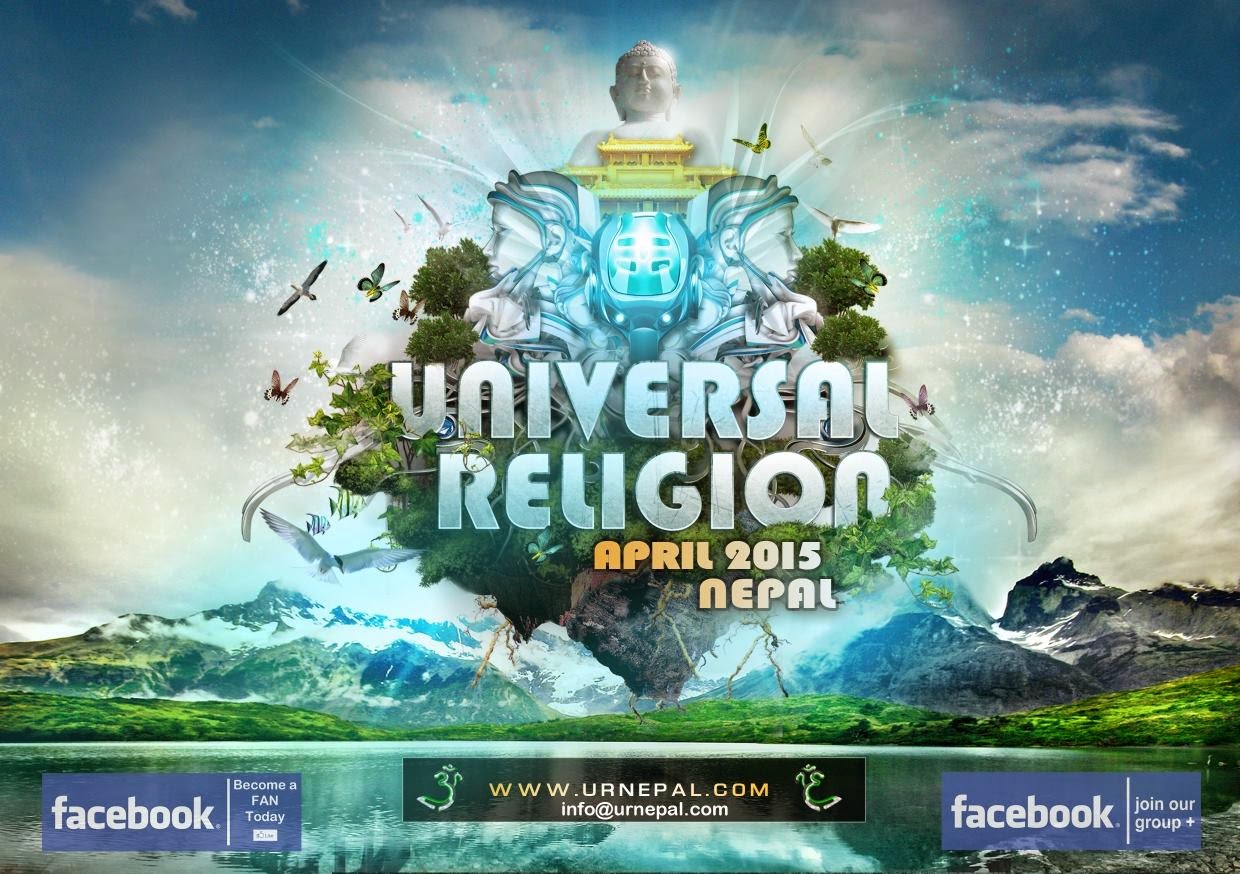
Trance festival in Nepal 2015


The Universal Religion is simply LOVE. We are privileged to be part of this great time of change in history and, as messengers of love we are responsible for making this new world blossom. It is an exchange of ideas, music, dance, sharing of energy, positivity and emotions which only seem to spread and grow further when the festival finishes. If even a thousand people were to return to their lives after experiencing the power of Universal Religion, and each one lived with the same philosophy as during the festival, the world would slowly start to seem a borderless place. One where family and friendships transcend nations, language, color, age and even blood, where an entire generation will live true to the ideas of oneness, love and mutual respect. This is the idea of a universal religion—one that is inclusive, gets recreated and gathers strength every year, as new energies enters its space.

Mount Everest and the Himalayas in HD

Wow. What a stunner. This breathtaking video was shot from above 20,000 feet and captures the Himalayas in such clear detail that I actually gasped when I watched it. You get to see Mount Everest, Ama Dablam and Lhotse in their natural glory and the view is just majestic. I don't think I'll ever get closer than this.
Make sure you watch for the shots at the end. Unreal.

The aerial cinema experts at Teton Gravity Research release the first ultra HD footage of the Himalayas shot from above 20,000 ft. with the GSS C520 system, the most advanced gyro-stabilized camera system in the world. Filmed from a helicopter with a crew flying from Kathmandu at 4,600 ft. up to 24,000 ft. on supplemental oxygen, these are some of the most stable, crisp, clear aerial shots of these mountains ever released, which include Mt. Everest, Ama Dablam, and Lhotse.

42 best treks to do in Nepal

  1. Everest Base Camp Trek  2. Annapurna Base Camp Trek 3. Manaslu Circuit Trek  4. Makalu Base Camp Trek 5. Kanchenjunga Circuit Trek 6. L...